The Bahá'í House of Worship in Delhi, India, popularly known as the Lotus Temple due to its flowerlike shape, is a Bahá'í House of Worship and also a prominent attraction in Delhi. It was completed in 1986 and serves as the Mother Temple of the Indian subcontinent. It has won numerous architectural awards and been featured in hundreds of newspaper and magazine articles.
As with all other Bahá'í Houses of Worship, the Lotus Temple is open to all regardless of religion, or any other distinction, as emphasized in Bahá'í texts. The Bahá'í laws emphasize that the spirit of the House of Worship be that it is a gathering place where people of all religions may worship God without denominational restrictions. The Bahá'í laws also stipulate that only the holy scriptures of the Bahá'í Faith and other religions can be read or chanted inside in any language; while readings and prayers can be set to music by choirs, no musical instruments can be played inside. Furthermore no sermons can be delivered, and there can be no ritualistic ceremonies practiced.
All Bahá'í Houses of Worship, including the Lotus Temple, share certain architectural elements, some of which are specified by Bahá'í scripture. `Abdu'l-Bahá, the son of the founder of the religion, stipulated that an essential architectural character of a House of Worship is a nine-sided circular shape. While all current Bahá'í Houses of Worship have a dome, this is not regarded as an essential part of their architecture. Bahá'í scripture also states that no pictures, statues or images be displayed within the House of Worship and no pulpits or altars be incorporated as an architectural feature (readers may stand behind simple portable lecture stands).
Inspired by the lotus flower, the design for the House of Worship in New Delhi is composed of 27 free-standing marble clad "petals" arranged in clusters of three to form nine sides. The nine doors of the Lotus Temple open onto a central hall slightly more than 40 meters tall that is capable of holding up to 2,500 people. The surface of the House of Worship is made of white marble from Penteli mountain in Greece, the very same from which many ancient monuments and other Bahá'í Houses of Worship are built. Along with its nine surrounding ponds and the gardens, the Lotus Temple property comprises 26 acres (105,000 m²; 10.5 ha).
The site is in the village of Bahapur, in the National Capital Territory of Delhi. The architect was an Iranian, who now lives in Canada, named Fariborz Sahba. He was approached in 1976 to design it and later oversaw its construction. The major part of the funds needed to buy this land was donated by Ardishír Rustampúr of Hyderabad, who gave his entire life savings for this purpose in 1953. A portion of construction budget was saved and used to build a greenhouse to study indigenous plants and flowers that would be appropriate for use on the site.
Thursday, October 20, 2011


audi q7
The Audi Q7 is a full-size luxury crossover SUV unveiled in September 2005 at the Frankfurt Motor Show. Production of the Q7 began in autumn of 2005 in Bratislava, Slovakia. It is the first SUV offering from Audi. Later, Audi's second SUV, the Q5, was unveiled as a 2009 model. Audi has since unveiled a third SUV model, the Q3, going on sale in the 3rd quarter of 2011.
The Q7 (internally designated Typ 4L) utilizes a modified version of the Volkswagen Group PL71 platform. Previewed by the Audi Pikes Peak quattro concept car, the Q7 is designed more for on-road use, and was not meant for serious off-road use where a transfer case is needed. In an off road test through the Australian outback it fared well for a "soft roader",[citation needed]. Although it lacks a low-range transfer case, it has quattro permanent four wheel drive system with a central differential lock, and an adjustable-height air suspension which helps in off road situations.
Despite its multiple airbags and safety electronics, such as Electronic Stability Programme (ESP), the Q7 scored only four stars out of five () in the Euro NCAP crash test for adult occupant protection. According to Audi, this was caused by a design error, and has since been fixed in cars manufactured after the test which should allegedly lead to five stars. Official tests to prove this remain to be done as of March 2009.
However in the United States, the Q7 received five out of five stars () from the National Highway Traffic Safety Administration (NHTSA) safety test for both front and side impacts. The Insurance Institute for Highway Safety awarded the Q7 its Top Safety Pick, with Good ratings in all 14 measured categories of the front and side impact test.
The Q7 hybrid was a concept vehicle using the engine from the 4.2 FSI with an electric motor to provide 200 N·m (150 lb·ft) extra torque, and nickel-metal hydride battery. It has 0–100 km/h acceleration of 6.8s. The vehicle weighs 2,410 kg (5,300 lb), 140 kg (310 lb) heavier than the petrol counterpart.

The Q7 (internally designated Typ 4L) utilizes a modified version of the Volkswagen Group PL71 platform. Previewed by the Audi Pikes Peak quattro concept car, the Q7 is designed more for on-road use, and was not meant for serious off-road use where a transfer case is needed. In an off road test through the Australian outback it fared well for a "soft roader",[citation needed]. Although it lacks a low-range transfer case, it has quattro permanent four wheel drive system with a central differential lock, and an adjustable-height air suspension which helps in off road situations.
Despite its multiple airbags and safety electronics, such as Electronic Stability Programme (ESP), the Q7 scored only four stars out of five () in the Euro NCAP crash test for adult occupant protection. According to Audi, this was caused by a design error, and has since been fixed in cars manufactured after the test which should allegedly lead to five stars. Official tests to prove this remain to be done as of March 2009.

However in the United States, the Q7 received five out of five stars () from the National Highway Traffic Safety Administration (NHTSA) safety test for both front and side impacts. The Insurance Institute for Highway Safety awarded the Q7 its Top Safety Pick, with Good ratings in all 14 measured categories of the front and side impact test.
The Q7 hybrid was a concept vehicle using the engine from the 4.2 FSI with an electric motor to provide 200 N·m (150 lb·ft) extra torque, and nickel-metal hydride battery. It has 0–100 km/h acceleration of 6.8s. The vehicle weighs 2,410 kg (5,300 lb), 140 kg (310 lb) heavier than the petrol counterpart.
lotus exige
The Lotus Exige ( /ɛɡˈziːʒ/) is a two-door, two-seat sports car made by Lotus Cars. It is essentially a coupé version of the Lotus Elise, a mid-engined roadster in production since 1996.
The original Exige (NA or naturally aspirated Exige) was launched in 2000 and had a 1.8 L Rover K Series engine in VHPD (Very High Performance Derivative) tune. It produced 177 bhp (132 kW; 179 PS) in standard form and 192 bhp (143 kW; 195 PS) in the "track spec" version.
In 2004, the Series 2 Exige was introduced. It features a 1.8 L 16-valve DOHC Toyota/Yamaha engine that produces 190 bhp (142 kW; 193 PS) with the Toyota engine designation of 2ZZ-GE. Compared to the Series 2 Elise, it has a front splitter, fibreglass hardtop roof with roof scoop, rear engine cover, and rear spoiler. The sole purpose of these aerodynamic additions to the base Elise is to create more downforce (almost 100 lb (45 kg) of downforce at 100 mph (160 km/h) in the Exige versus 13 lb (5.9 kg) at 100 mph (160 km/h) in the Elise).
In February 2005, Lotus announced a limited production run of 50 Exiges, using the Toyota engine with a supercharger, that increases the power output to 243 bhp (181 kW; 246 PS). These vehicles were only available in yellow or black, representing the colours of Lotus Sport, and are badged 240R. They have a projected 0-60 mph (0–100 km/h) time of 3.9 seconds and 0-100 mph (0–160 km/h) of 9.9 seconds, with a top speed of 155 mph (249 km/h) at a cost of £44,000.00 (approximately $72,500.00 or €51,000.00).[citation needed]
The North American Exige was unveiled at the Los Angeles Auto Show in January 2006. In February 2006, Lotus announced the Exige S model which used a supercharged Toyota engine producing 220 bhp (164 kW; 223 PS). The S was also made available in North American markets as a 2007 model.

The original Exige (NA or naturally aspirated Exige) was launched in 2000 and had a 1.8 L Rover K Series engine in VHPD (Very High Performance Derivative) tune. It produced 177 bhp (132 kW; 179 PS) in standard form and 192 bhp (143 kW; 195 PS) in the "track spec" version.
In 2004, the Series 2 Exige was introduced. It features a 1.8 L 16-valve DOHC Toyota/Yamaha engine that produces 190 bhp (142 kW; 193 PS) with the Toyota engine designation of 2ZZ-GE. Compared to the Series 2 Elise, it has a front splitter, fibreglass hardtop roof with roof scoop, rear engine cover, and rear spoiler. The sole purpose of these aerodynamic additions to the base Elise is to create more downforce (almost 100 lb (45 kg) of downforce at 100 mph (160 km/h) in the Exige versus 13 lb (5.9 kg) at 100 mph (160 km/h) in the Elise).

In February 2005, Lotus announced a limited production run of 50 Exiges, using the Toyota engine with a supercharger, that increases the power output to 243 bhp (181 kW; 246 PS). These vehicles were only available in yellow or black, representing the colours of Lotus Sport, and are badged 240R. They have a projected 0-60 mph (0–100 km/h) time of 3.9 seconds and 0-100 mph (0–160 km/h) of 9.9 seconds, with a top speed of 155 mph (249 km/h) at a cost of £44,000.00 (approximately $72,500.00 or €51,000.00).[citation needed]
The North American Exige was unveiled at the Los Angeles Auto Show in January 2006. In February 2006, Lotus announced the Exige S model which used a supercharged Toyota engine producing 220 bhp (164 kW; 223 PS). The S was also made available in North American markets as a 2007 model.


audi a6
The Audi A6 is an executive car marketed by the German automaker Audi AG, now in its fourth generation. As the successor to the Audi 100, the A6 is manufactured in Neckarsulm, Germany – and is available in saloon, and wagon configurations, the latter marketed by Audi as the Avant.
All generations of the A6 have offered either front-wheel drive or Torsen-based four-wheel drive – marketed by Audi as their Quattro system. Second and third generation A6 models have shared their platform with the company's Allroad models.
Audi's mid-size car was previously named the Audi 100 (or Audi 5000 in the United States), and was released in three successive generations (Audi C1, Audi C2 and Audi C3). In 1994, the latest generation (C4) of the Audi 100 was facelifted and re-badged as the Audi A6, to fit in with Audi's new alphanumeric nomenclature (as the full-size A8 had just been introduced). The exterior was changed only slightly from the "C4" Audi 100 – new front and rear lights, new radiator grille, similarly with chassis and engine and transmission choices. The United Kingdom was the first market to receive the A6, as stock of right-hand-drive Audi 100s had run out before expected, and before the rest of mainland Europe.
The new engines for the A6 were 1.8 litre 20v inline four cylinder, and 2.8 litre 30v V6 petrol engines, with the 2.3 litre inline five engine being dropped on most markets. For the diesel engines, an inline four 1.9 Turbocharged Direct Injection (TDI), and the inline five (R5) 2.5 TDI (103 kW (140 PS; 138 bhp)) were available.
Until 1997, the A6 came with several different engines, two of them turbodiesel, and most of them available with Audi's Torsen-based quattro permanent four-wheel drive system. The A6 was available with saloon and Avant bodies.

All generations of the A6 have offered either front-wheel drive or Torsen-based four-wheel drive – marketed by Audi as their Quattro system. Second and third generation A6 models have shared their platform with the company's Allroad models.
Audi's mid-size car was previously named the Audi 100 (or Audi 5000 in the United States), and was released in three successive generations (Audi C1, Audi C2 and Audi C3). In 1994, the latest generation (C4) of the Audi 100 was facelifted and re-badged as the Audi A6, to fit in with Audi's new alphanumeric nomenclature (as the full-size A8 had just been introduced). The exterior was changed only slightly from the "C4" Audi 100 – new front and rear lights, new radiator grille, similarly with chassis and engine and transmission choices. The United Kingdom was the first market to receive the A6, as stock of right-hand-drive Audi 100s had run out before expected, and before the rest of mainland Europe.

The new engines for the A6 were 1.8 litre 20v inline four cylinder, and 2.8 litre 30v V6 petrol engines, with the 2.3 litre inline five engine being dropped on most markets. For the diesel engines, an inline four 1.9 Turbocharged Direct Injection (TDI), and the inline five (R5) 2.5 TDI (103 kW (140 PS; 138 bhp)) were available.
Until 1997, the A6 came with several different engines, two of them turbodiesel, and most of them available with Audi's Torsen-based quattro permanent four-wheel drive system. The A6 was available with saloon and Avant bodies.


maserati wallpaper
A sports sedan or a sports saloon is a descriptive term applied to a sedan automobile that is designed to look and feel "sporty", offering the motorist more connection with the driving experience, while providing the comfort and amenities expected of a luxury sedan. A wider definition that includes related coupé, convertibles, crossovers is known as sport luxury. Most vehicles in this category overlap with the compact executive car and executive car classifications, while the sporty small family sedans are called sport compacts (mostly used in North America).
The term was originally introduced in the 1930s and applied to lighter, more streamlined closed body coachwork fitted by car makers.[citation needed] Rover, for example, had Sports Saloon versions of several of their models.
It was later applied by manufacturers to special versions of their vehicles that allowed them to enter production cars in motor races with extra modifications not normally permitted by the regulations.[citation needed] Such regulations required cars to be homologated typically by selling them in minimum numbers to the public. Some of the earlier examples were the Alfa Romeo 1900, Triumph Dolomite and Lotus Cortina.
Traditionally sports sedans have a manual transmission and tachometer in order to provide that "sports look and feel" and are rear wheel drive, have good handling characteristics, and adequate power. Because of the US move to automatic transmission and front wheel drive these types are now also to be found in the sport sedan category. Recent sport sedans such as the latest iterations of the BMW M5 and BMW M3 had implemented semi-automatic transmissions.
In North America, most luxury import sedans are often considered "sport sedans" because of their higher performance, handling, and expensive available amenities relative to that of mass market cars. There is some price overlapping, for instance as an entry-level BMW 328i has a similar (manufacturer's) suggested retail price to a Toyota Camry XLE V6.
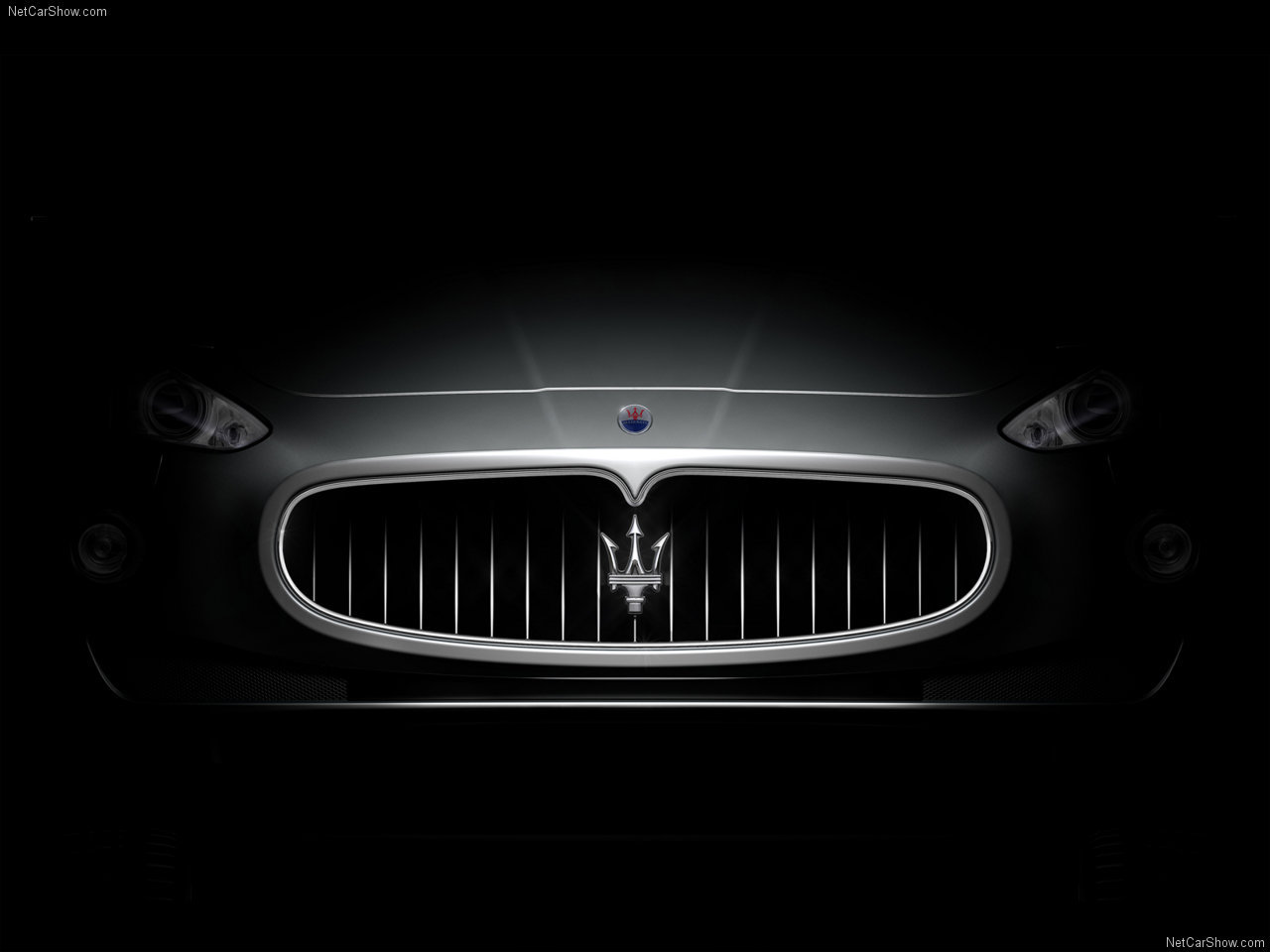
The term was originally introduced in the 1930s and applied to lighter, more streamlined closed body coachwork fitted by car makers.[citation needed] Rover, for example, had Sports Saloon versions of several of their models.
It was later applied by manufacturers to special versions of their vehicles that allowed them to enter production cars in motor races with extra modifications not normally permitted by the regulations.[citation needed] Such regulations required cars to be homologated typically by selling them in minimum numbers to the public. Some of the earlier examples were the Alfa Romeo 1900, Triumph Dolomite and Lotus Cortina.
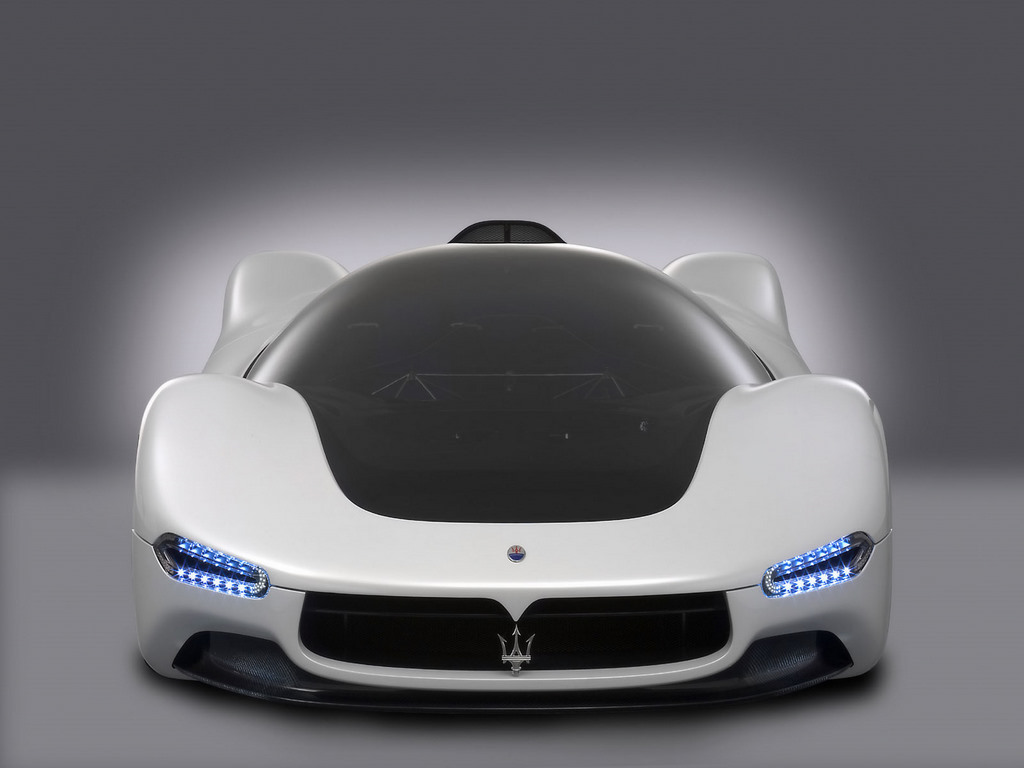
Traditionally sports sedans have a manual transmission and tachometer in order to provide that "sports look and feel" and are rear wheel drive, have good handling characteristics, and adequate power. Because of the US move to automatic transmission and front wheel drive these types are now also to be found in the sport sedan category. Recent sport sedans such as the latest iterations of the BMW M5 and BMW M3 had implemented semi-automatic transmissions.
In North America, most luxury import sedans are often considered "sport sedans" because of their higher performance, handling, and expensive available amenities relative to that of mass market cars. There is some price overlapping, for instance as an entry-level BMW 328i has a similar (manufacturer's) suggested retail price to a Toyota Camry XLE V6.
lamborghini murcielago
The Lamborghini Murciélago is a two-door, two-seat sports car produced by Italian automaker Lamborghini between 2001 and 2010. Successor to the Diablo and flagship of the automaker's lineup, the Murciélago was introduced as a coupé in 2001. The automaker's first new design in eleven years, the car was also the brand's first new model under the ownership of German parent company Audi. It was styled by Peruvian-born Belgian Luc Donckerwolke, Lamborghini's head of design from 1998 to 2005.
A roadster version was introduced in 2004, followed by the updated LP 640 coupé and roadster and limited edition LP 650-4 Roadster. The final variation to wear the Murciélago nameplate was the LP 670-4 SuperVeloce, powered by the largest and final evolution of the historic Lamborghini V12 engine. Production of the Murciélago ended on November 5, 2010, with a total run of 4,099 cars. Its successor, the Aventador, was released at the 2011 Geneva Motor Show.
In a continuation of Lamborghini's tradition of naming its cars after stars from the world of bullfighting, the Murciélago was named for a fighting bull that survived 28 sword strokes in an 1879 fight against Rafael "El Lagartijo" Molina Sanchez, at the Coso de los califas bullring in Córdoba, Spain. Murciélago fought with such passion and spirit that the matador chose to spare its life, a rare honor. The bull, which came from Joaquin del Val di Navarra's farm, was later presented as a gift to Don Antonio Miura, a noted local breeder; thus began the famed Miura line of fighting bulls, and the name for one of Lamborghini's greatest designs.
Murciélago is the Spanish name for the bat. The word is pronounced [murθiˈelaɣo], with a voiceless dental fricative [θ] (as in English thing), in the Castilian Spanish spoken in most of Spain. However, the Italian automaker often uses the Southern Spain and Latin American Spanish pronunciation, [murˈsjelaɣo], with an [s] sound.
The Murciélago is an all-wheel-drive, mid-engined super sports car. With an angular design and an exceptionally low slung body, the highest point of the roof is just under 4 feet above the ground. One of the vehicle's most distinguishing features are its scissor doors. which lends to the extreme image. First-generation Murciélagos, produced between 2001 and 2010, were powered by a Lamborghini V12 which traces its roots back to the company's beginnings in the 1960s. The rear differential is integrated to the engine itself, with a viscous coupling center differential providing drive to the front wheels. Power delivered through a six-speed manual. The Murciélago suspension uses an independent double-wishbone design, and bodywork features carbon fibre, steel and aluminum parts. The rear spoiler and the active air intakes integrated into the car's shoulders are electromechanically controlled, deploying automatically only at high speeds in an effort to maximize both aerodynamic and cooling efficiency.

A roadster version was introduced in 2004, followed by the updated LP 640 coupé and roadster and limited edition LP 650-4 Roadster. The final variation to wear the Murciélago nameplate was the LP 670-4 SuperVeloce, powered by the largest and final evolution of the historic Lamborghini V12 engine. Production of the Murciélago ended on November 5, 2010, with a total run of 4,099 cars. Its successor, the Aventador, was released at the 2011 Geneva Motor Show.
In a continuation of Lamborghini's tradition of naming its cars after stars from the world of bullfighting, the Murciélago was named for a fighting bull that survived 28 sword strokes in an 1879 fight against Rafael "El Lagartijo" Molina Sanchez, at the Coso de los califas bullring in Córdoba, Spain. Murciélago fought with such passion and spirit that the matador chose to spare its life, a rare honor. The bull, which came from Joaquin del Val di Navarra's farm, was later presented as a gift to Don Antonio Miura, a noted local breeder; thus began the famed Miura line of fighting bulls, and the name for one of Lamborghini's greatest designs.

Murciélago is the Spanish name for the bat. The word is pronounced [murθiˈelaɣo], with a voiceless dental fricative [θ] (as in English thing), in the Castilian Spanish spoken in most of Spain. However, the Italian automaker often uses the Southern Spain and Latin American Spanish pronunciation, [murˈsjelaɣo], with an [s] sound.
The Murciélago is an all-wheel-drive, mid-engined super sports car. With an angular design and an exceptionally low slung body, the highest point of the roof is just under 4 feet above the ground. One of the vehicle's most distinguishing features are its scissor doors. which lends to the extreme image. First-generation Murciélagos, produced between 2001 and 2010, were powered by a Lamborghini V12 which traces its roots back to the company's beginnings in the 1960s. The rear differential is integrated to the engine itself, with a viscous coupling center differential providing drive to the front wheels. Power delivered through a six-speed manual. The Murciélago suspension uses an independent double-wishbone design, and bodywork features carbon fibre, steel and aluminum parts. The rear spoiler and the active air intakes integrated into the car's shoulders are electromechanically controlled, deploying automatically only at high speeds in an effort to maximize both aerodynamic and cooling efficiency.


lamborghini diablo
The Lamborghini Diablo is a high-performance mid-engined sports car that was built by Italian automaker Lamborghini between 1990 and 2001. It was the first Lamborghini capable of attaining a top speed in excess of 200 miles per hour (320 km/h). After the end of its production run in 2001, the Diablo was replaced by the Lamborghini Murciélago.
At a time when the company was financed by the Swiss-based Mimram brothers, Lamborghini began development of what was codenamed Project 132 in June 1985 as a replacement for the Countach model. The brief stated that its top speed had to be at least 315 km/h (196 mph).
The design of the car was contracted to Marcello Gandini, who had designed its two predecessors. When Chrysler bought the company in 1987, providing money to complete its development, its management was uncomfortable with Gandini's designs and commissioned its design team in Detroit to execute a third extensive redesign, smoothing out the trademark sharp edges and corners of Gandini's original design, and leaving him famously unimpressed. In fact, Gandini was so disappointed with the "softened" shape that he would later realize his original design in the Cizeta-Moroder V16T.
The car became known as the Diablo, carrying on Lamborghini's tradition of naming its cars after breeds of fighting bull. The Diablo was named after a ferocious bull raised by the Duke of Veragua in the 19th century, famous for fighting an epic battle with 'El Chicorro' in Madrid on July 11, 1869. In the words of Top Gear presenter Jeremy Clarkson, the Diablo was designed "solely to be the biggest head-turner in the world."
The Diablo was presented to the public for sale on January 21, 1990, at a base price of $240,000 at the Hotel de Paris in Monte Carlo during the second Lamborghini Day. Power came from a 5.7 L (348 cu in), 48-valve version of the existing Lamborghini V12 featuring dual overhead cams and computer-controlled multi-point fuel injection, producing a maximum output of 492 PS (362 kW; 485 hp) and 580 N·m (428 lb·ft) of torque. The vehicle could reach 100 km/h (62 mph) in about 4.5 seconds, with a top speed of 202 mph (325 km/h). The Diablo was rear-wheel drive and the engine was mid-mounted to aid its weight balance.

At a time when the company was financed by the Swiss-based Mimram brothers, Lamborghini began development of what was codenamed Project 132 in June 1985 as a replacement for the Countach model. The brief stated that its top speed had to be at least 315 km/h (196 mph).
The design of the car was contracted to Marcello Gandini, who had designed its two predecessors. When Chrysler bought the company in 1987, providing money to complete its development, its management was uncomfortable with Gandini's designs and commissioned its design team in Detroit to execute a third extensive redesign, smoothing out the trademark sharp edges and corners of Gandini's original design, and leaving him famously unimpressed. In fact, Gandini was so disappointed with the "softened" shape that he would later realize his original design in the Cizeta-Moroder V16T.

The car became known as the Diablo, carrying on Lamborghini's tradition of naming its cars after breeds of fighting bull. The Diablo was named after a ferocious bull raised by the Duke of Veragua in the 19th century, famous for fighting an epic battle with 'El Chicorro' in Madrid on July 11, 1869. In the words of Top Gear presenter Jeremy Clarkson, the Diablo was designed "solely to be the biggest head-turner in the world."
The Diablo was presented to the public for sale on January 21, 1990, at a base price of $240,000 at the Hotel de Paris in Monte Carlo during the second Lamborghini Day. Power came from a 5.7 L (348 cu in), 48-valve version of the existing Lamborghini V12 featuring dual overhead cams and computer-controlled multi-point fuel injection, producing a maximum output of 492 PS (362 kW; 485 hp) and 580 N·m (428 lb·ft) of torque. The vehicle could reach 100 km/h (62 mph) in about 4.5 seconds, with a top speed of 202 mph (325 km/h). The Diablo was rear-wheel drive and the engine was mid-mounted to aid its weight balance.


Subscribe to:
Posts (Atom)